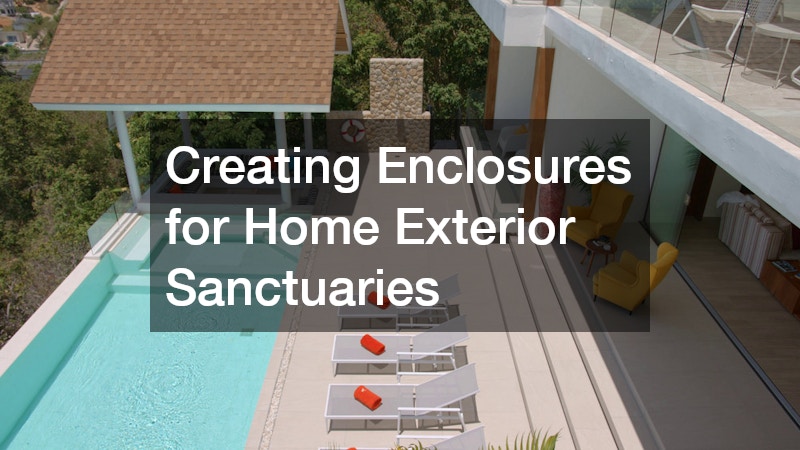
The modern home extends beyond its interior walls. Recently, there has been a shift in how we view outdoor spaces. A backyard, once just grass to mow or dirt for children to play on, is now an extension of our indoor living areas. Homeowners see their yards as exterior sanctuaries, personal, functional spaces for mental decompression, relaxation, and social gatherings. However, achieving a true sanctuary requires more than just placing lounge chairs on a patio. Relaxation is difficult when exposed to neighbors, traffic noise, or harsh winds. Without boundaries, an outdoor space remains exposed. To transform a yard into an outdoor room, consider enclosures. Enclosures not only mark property lines but also provide security, reduce environmental impact, buffer sound, and create pleasing visuals.
Choose Your Boundary Material Based on Wind and Sunlight Exposure

When enclosing your yard, the perimeter boundary is your first and most critical line of defense. Many homeowners mistakenly choose materials based on aesthetics or cost, ignoring their property’s microclimates. Before digging, audit how wind and sunlight interact with your land throughout the day.
A solid barrier acts like a sail in a storm. If your property is on an open hill or high-wind corridor, solid walls can trap air currents and damage vegetation. Semi-private barriers, like horizontal slats or lattice tops, allow air to filter through, reducing wind force while maintaining circulation. Sunlight tracking is also crucial, as tall, solid enclosures on the southern or western edge will cast large shadows.
To maximize both structural integrity and long-term comfort, implement these specific planning steps:
- Map daily sun patterns: Trace the sun’s path across your yard during different seasons to ensure a new six-foot solid barrier won’t permanently plunge your vegetable garden or main patio into cold, damp shadow.
- Audit local zoning codes and HOA guidelines: Check your municipality’s height limits and setback rules before purchasing materials, as most towns restrict rear yard barriers to six feet and front yard structures to three or four feet.
- Locate all underground utility lines: Call your local utility protection service to mark water, gas, and electric lines before digging post holes to avoid costly damage or hazardous service interruptions.
- Filter wind with semi-private gaps: If your yard sits in a high-wind corridor, choose shadowbox or lattice designs that let breezes pass through safely instead of solid panels that risk warping or blowing over.
- Use a professional fencing installation: Hire certified fencing installation professionals to set perimeter posts below the local frost line and anchor them in concrete, preventing the leaning and sagging that ruins DIY projects after heavy storms.
- Incorporate structural iron railings: Install open iron railings on raised decks, multi-tiered patios, or swimming pool borders to provide robust, code-compliant fall protection while keeping your sightlines open and airy.
Use Terracing to Turn Sloped Hazards into Usable Zones
An uneven yard can derail your dreams of a peaceful outdoor retreat by making furniture placement difficult, causing rainwater to pool, and accelerating soil erosion, which washes away topsoil and exposes plant roots. Instead of fighting the natural slope, use structural grading techniques to create flat, usable steps.
Terracing breaks an incline into level platforms, transforming the spatial dynamics. Each tier can serve a unique function: the lowest tier might host a fire pit, the middle can feature a lawn, and the highest tier can be filled with flowers. Water management must be your focus; heavy rain creates hydrostatic pressure behind barriers, potentially destroying poorly built structures.
To stabilize your sloped yard and create beautiful, multi-level living areas, follow these structural guidelines:
- Calculate total slope rise and run: Measure the exact height and length of your hill to determine how many levels you need; a series of short, manageable three-foot steps is safer and easier to build than one massive wall.
- Install integrated drainage lines: Place perforated French drains wrapped in landscaping fabric directly behind the base of your tiers to channel rainwater away from your primary living spaces.
- Pack walls with crushed stone backfill: Fill the immediate twelve inches behind your vertical barriers with clean, angular gravel to ensure water drains straight down to your pipes instead of turning the soil into heavy mud.
- Build a structural retaining wall: Use interlocking concrete blocks or heavy timbers with buried “deadman” anchors extending back into the hillside into a retaining wall to hold back tons of moving earth and prevent catastrophic shifting.
- Hire a certified masonry contractor: Invest in an experienced masonry contractor to face your earth-retention structures with natural fieldstone or architectural brickwork, transforming an engineering necessity into a gorgeous visual anchor.
Map Foot Traffic Patterns Before Laying Permanent Stone

Once your perimeter is secure and your land is leveled, it is time to establish the internal layout, often referred to as the “floor” of your outdoor room. A common mistake in yard design is rushing to install patios and paths without analyzing how people naturally move through the space. If your walkways are poorly positioned, guests will inevitably cut across your grass or stumble through garden beds, disrupting the organic harmony of the environment.
Before committing to permanent construction materials, spend a week observing the natural foot traffic patterns from your home’s exit points to the various corners of your yard. Mark these natural desire lines with stakes or temporary string lines. Your walkways should follow these intuitive paths, curving gently around natural obstacles rather than forcing rigid, awkward 90-degree turns that feel institutional rather than relaxing. Material selection for your sanctuary floor requires a careful balance of durability and comfort.
To design a highly functional and beautiful outdoor floor plan, execute these layout techniques:
- Mark natural path lines with string: Observe where family members and pets naturally walk over a week, and lay out your permanent pathways along those organic paths to prevent future trampling of your gardens.
- Match stone textures to area functions: Use smooth, uniform flagstones or concrete pavers for high-traffic dining hubs to keep tables steady, and use loose pea gravel or wood chips for quiet, secondary reading nooks.
- Select slip-resistant walkway finishes: Choose textured, unpolished stones or tumbled pavers that retain traction when wet from heavy morning dew, rain, or swimming pool splash zones.
- Enlist specialized hardscaping services: Contract experienced professionals in hardscaping services to excavate the earth, lay a compacted gravel sub-base, and install durable patios or walkways that won’t sink, crack, or shift over time.
- Rely on unified landscape designs: Work from a comprehensive master plan of landscape designs that scales your patios to match your home’s architecture, protects existing root zones, and balances hard surfaces with soft green spaces.
Layer Your Foliage by Mature Height to Create Low-Maintenance Privacy Layers
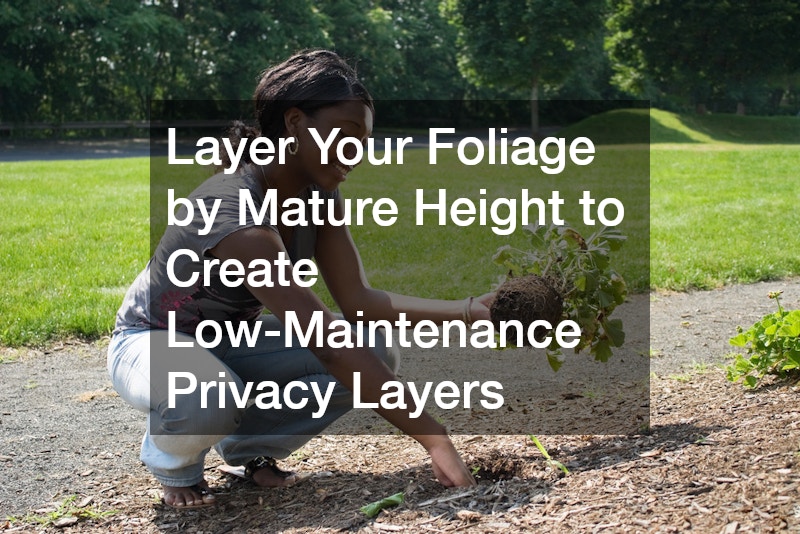
While wooden walls and stone patios provide immediate privacy and structure, it is the living elements that breathe life, color, and soul into an exterior sanctuary. A yard enclosed entirely by wood and stone can feel sterile, hot, and confining. Incorporating a dynamic “living wall” of strategic vegetation adds acoustic dampening benefits, absorbing high-frequency street noises far better than hard, reflective surfaces can.
To achieve maximum privacy and year-round visual interest without creating a grueling weekend chore, you should design your green boundaries using a layered approach. Instead of planting a single, monotonous row of identical hedges—which can look stark and is highly vulnerable to being completely wiped out by a single species-specific disease—blend a diverse mix of trees, shrubs, and perennials arranged by their mature heights. The outermost layer provides high overhead privacy, the mid-story layer offers color at eye level, and the lowest layer softens the hard edges of your walkways.
To build a thriving, low-maintenance living barrier, apply these horticultural strategies:
- Verify mature height and width tags: Research the ultimate growth dimensions of every species before planting to ensure tall trees won’t crowd out power lines or disrupt underground plumbing down the road.
- Group your flora by water needs: Practice hydrozoning by placing thirsty plants together in low spots and drought-tolerant varieties on high slopes to cut down on manual watering and prevent root rot.
- Mix evergreen and deciduous varieties: Blend year-round coverage elements like arborvitae with seasonal color changers like dogwoods to maintain privacy in the winter while enjoying spring blooms and autumn foliage.
- Browse local plants for sale: Visit regional nurseries to source local plants for sale that matches your yard’s specific soil type and daily sun exposure, ensuring higher survival rates.
- Schedule professional tree services: Hire certified arborists for tree services including trim back deadwood, clear away hazardous overhanging limbs, and thin out dense canopies to let optimal dappled sunlight reach your lower garden layers.
Outsource Heavy Utility Upkeep to Protect Your Leisure Time
The ultimate goal of an exterior sanctuary is to provide a stress-free environment for relaxation, meditation, and recharging. However, many homeowners design complex outdoor spaces and end up trapped in exhausting weekend labor. If your free time is consumed by pulling weeds, treating pests, and using heavy machinery, your sanctuary may become a source of resentment.
To maintain the peacefulness of your retreat, establish an efficient, sustainable maintenance strategy. While tasks like deadheading a few roses or watering herbs can be therapeutic, heavy, repetitive yard work can be delegated.
To maintain your outdoor oasis without sacrificing your weekends, implement these upkeep tactics:
- Install an automated drip irrigation system: Put your watering routines on a smart timer that delivers moisture directly to plant roots early in the morning, saving water and eliminating daily hose-dragging chores.
- Apply a three-inch layer of organic mulch: Cover all open garden beds with hardwood mulch or pine bark to suppress weed growth, retain soil moisture, and protect plant roots from extreme summer heat.
- Set up a proactive pest management schedule: Use organic or targeted treatments early in the spring to stop invasive insects from damaging your living privacy walls before they can take hold.
- Delegate chores to recurring lawn services: Contract a reliable local crew to handle lawn services like fertilization, core aeration, weed control, and precision mowing, keeping your lawn lush and healthy while saving your energy for relaxation.
Conceal Tool Clutter Behind Architectural Focal Points

Every functional outdoor space requires an array of utilitarian tools to keep it running smoothly. Items like long garden hoses, bags of soil, leaf blowers, lawnmowers, and seasonal cushions are essential, but leaving them strewn about or piled haphazardly in a corner will instantly shatter the visual serenity of your sanctuary. To maintain a truly immersive, clutter-free environment, you must integrate dedicated storage solutions that double as elegant architectural features.
Instead of throwing up a cheap, flimsy plastic storage box that degrades in the sun and clashes with your natural stone and timber aesthetics, opt for a custom storage building that mirrors the design language of your home. By matching the siding material, paint trim, and roof pitch of your primary residence, your storage structure becomes an intentional, harmonious component of the landscape design rather than an unsightly afterthought. Position the building tucked into a rear corner of your enclosure, using tall ornamental grasses or wooden trellises woven with climbing jasmine to screen it from your primary seating areas.
To keep your sanctuary organized, clean, and visually serene, utilize these storage tips:
- Match your outbuilding to your home’s architecture: Use the same siding material, paint trim, and roofing style as your main house so your storage area looks like an intentional design choice rather than an ugly afterthought.
- Screen storage walls with tall ornamental grasses: Plant dense, fast-growing flora or set up a cedar trellis with climbing vines directly in front of the structure to block it from your main seating areas.
- Install vertical wall racks and heavy-duty pegboards: Mount hooks and shelving inside to keep long-handled tools, hoses, and weed eaters off the floor, maximizing your available floor space.
- Lay a solid gravel or paver access path: Build a wide, stable walkway leading straight to the storage entrance so you can easily wheel heavy equipment in and out without tearing up your lawn or tracking mud.
- Work with professional shed services: Hire experts in shed services to install a durable, well-ventilated, and weatherproof utility building on a level concrete pad, keeping your expensive tools safe from moisture damage all year long.
Building a private exterior sanctuary is a transformative investment in your overall quality of life. It requires moving past the old concept of a backyard as just an empty plot of land, choosing instead to view it as a series of dynamic, interconnected outdoor rooms. By carefully planning your perimeter boundaries to handle wind and light, terracing sloped ground into stable platforms, mapping out intuitive footpaths, and installing rich, layered layers of living privacy plants, you can create an immersive environment that shuts out the chaos of the outside world.
A successful sanctuary doesn’t happen by accident; it’s the result of balancing architectural lines with organic life. By keeping utility tools organized out of sight and outsourcing the physical upkeep of your turf and structures, you protect your free time and preserve your yard as a place of true relaxation. Take some time this weekend to walk your property lines, identify your current privacy gaps, and select one foundational element to begin your journey toward a beautiful, enclosed home retreat.